
Kia Cadenza YG: Fuel Delivery System / Delivery Pipe Repair procedures
| Removal |
In case of removing the high pressure fuel pump, high
pressure fuel pipe, delivery pipe, and injector, there may be injury
caused by leakage of the high pressure fuel. So don’t do any repair
work right after engine stops.
|

| 1. |
Turn the ignition switch OFF and disconnect the battery negative (-) cable. |
| 2. |
Release the residual pressure in fuel line.
(Refer to the Fuel Delivery System - Repair Procedures - "Release Residual Pressure in Fuel Line").
|

| 3. |
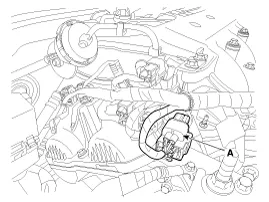
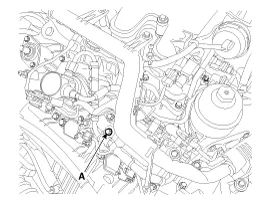
Disconnect the injectors & rail pressure sensor connector (A).
|
| 4. |
Remove the intake manifold.
(Refer to Engine Mechanical System - "Intake Manifold") |
| 5. |
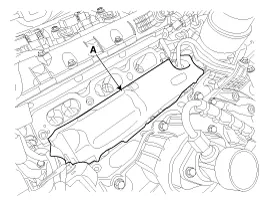
Remove the injector foam (A).
|
| 6. |
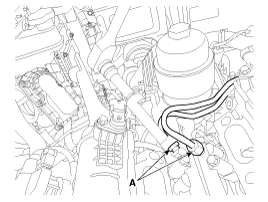
Remove the high pressure fuel pipe.
|

| 7. |
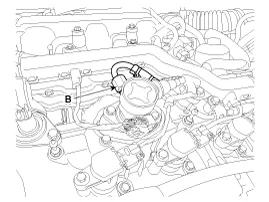
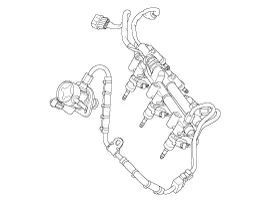
Remove the installation bolt (A), and then remove the delivery pipe and injector assembly from the engine.
|

| Installation |
|
|
|
|
|
|

 →
→  →
→  ) in several cycles up to the specified torque.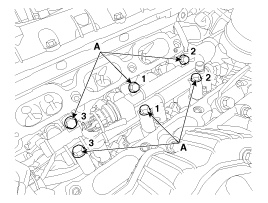
| 1. |
Install in the reverse order of removal.
|
Removal 1. Turn the ignition switch OFF and disconnect the negative (-) battery cable. 2. Disconnect the accelerator position sensor connector (A).
Removal In case of removing the high pressure fuel pump, high pressure fuel pipe, delivery pipe, and injector, there may be injury caused by leakage of the high pressure fuel.
Other information:
Kia Cadenza YG 2016-2021 Service Manual: Adaptive Front Lighting System Repair procedures
Removal 1. Disconnect the negative (-) battery terminal. 2. Using a screwdriver or remover, remove the crash pad side cover (A). [RH] 3. Disconnect the stopper (B) from the glove box (A). 4. Disconnect the air damper (A) from the glove box (B).
Kia Cadenza YG 2016-2021 Service Manual: Ambient Sensor Description and Operation
Description 1. The ambient temperature sensor is located at the front of the condenser and detects ambient air temperature. It is a negative type thermistor resistance will increase with lower temperature, and decrease with higher temperatures.
Categories
- Manuals Home
- Kia Cadenza Owners Manual
- Kia Cadenza Service Manual
- Body (Interior and Exterior)
- Brake System
- Body Control Module (BCM) Description and Operation
- New on site
- Most important about car
