Kia Cadenza YG: Fuel Delivery System / Fuel Pressure Regulator Repair procedures
Kia Cadenza YG 2016-2021 Service Manual / Engine Control / Fuel System / Fuel Delivery System / Fuel Pressure Regulator Repair procedures
| Removal |
| 1. |
Remove the fuel pump.
(Refer to Fuel Delivery System - “Fuel Pump”) |
| 2. |
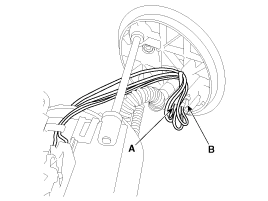
Disconnect the electric pump wiring connector (A) and the fuel sender connector (B).
|
| 3. |
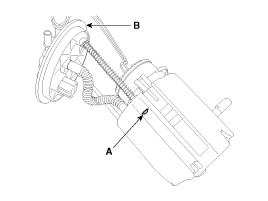
Remove the cushion pipe fixing clip (A), and then separate the head assembly (B) from reservoir cup.
|
| 4. |
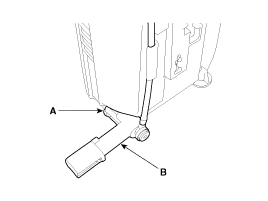
Remove the return nozzle (B) after releasing the fixing hook (A).
|
| 5. |
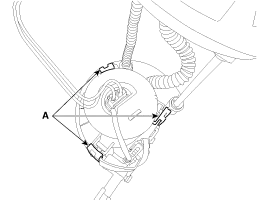
Remove the reservoir-cup after releasing the fixing hooks (A).
|
| 6. |
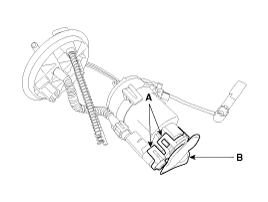
Remove the pre-filter (B) after releasing the fixing hooks (A).
|

| 7. |
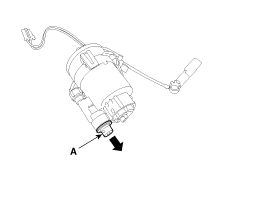
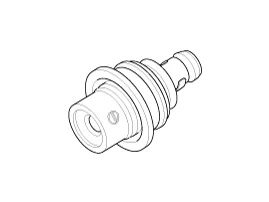
Remove the fuel pressure regulator (A) in the direction.
|
| Installation |
| 1. |
Install in the reverse order of removal. |
Removal 1. Remove the fuel pump. (Refer to Fuel Delivery System - “Fuel Pump”) 2. Disconnect the fuel sender connector (A). 3. Remove the fuel sender (A) after releasing the fix hook.
Description The fuel pump control module (FPCM) is installed on the right side of the fuel tank and controls the DC motor mounted inside the low pressure fuel pump.
Other information:
Kia Cadenza YG 2016-2021 Service Manual: Components and Components Location
C
Kia Cadenza YG 2016-2021 Service Manual: Climate Control Air Filtar Repair procedures
Replacement 1. Disconnect the damper (B) from the glove box (A) and then remove the glove box lift (C). 2. Remove the filter cover (A) with pushing the knob. 3. Replace the air filter (B), install it after making sure of the direction of air filter.
Categories
- Manuals Home
- Kia Cadenza Owners Manual
- Kia Cadenza Service Manual
- Engine Electrical System
- Schematic Diagrams
- Automatic Transaxle System
- New on site
- Most important about car

Copyright © 2026 www.kcadenzavg.com - 0.0214