
Kia Cadenza YG: Engine Control System / Heated Oxygen Sensor (HO2S) Repair procedures
Kia Cadenza YG 2016-2021 Service Manual / Engine Control / Fuel System / Engine Control System / Heated Oxygen Sensor (HO2S) Repair procedures
| Inspection |
| 1. |
Turn the ignition switch OFF. |
| 2. |
Disconnect the HO2S connector. |
| 3. |
Measure resistance between the HO2S terminals 3 and 4. |
| 4. |
Check that the resistance is within the specification.
|
| Removal |
| 1. |
Turn the ignition switch OFF and disconnect the battery negative (-) cable. |
| 2. |
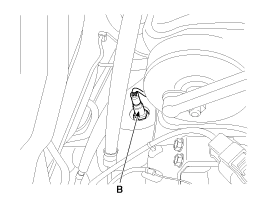
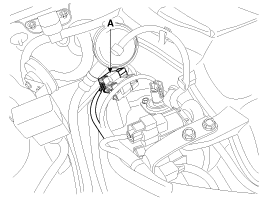
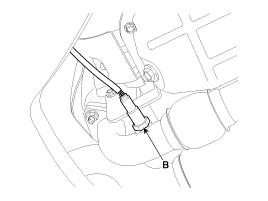
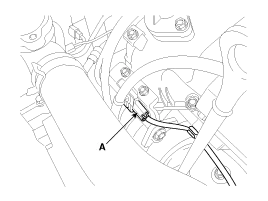
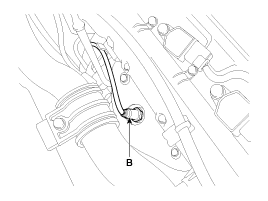
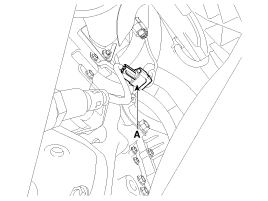
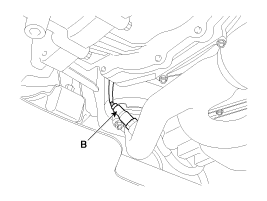
Disconnect the connector (A), and then remove the sensor (B).
[Bank 1/Sensor 1]
[Bank 1/Sensor 2]
[Bank 2/Sensor 1]
[Bank 2/Sensor 2]
|


| Installation |
|

|
| 1. |
Install in the reverse order of removal.
|
Circuit Diagram
Description Rail Pressure Sensor (RPS) is installed on the delivery pipe and measures the instantaneous fuel pressure in the delivery pipe. The sensing element (Semiconductor element) built in the sensor converts the pressure to voltage signal.
Other information:
Kia Cadenza YG 2016-2021 Service Manual: Schematic Diagrams
C
Kia Cadenza YG 2016-2021 Service Manual: Evaporator unit Repair procedures
Inspection 1. Ignition "OFF". 2. Disconnect evaporator temperature sensor. 3. Using the multi-tester, Measure resistance between terminal "1" and "2" of evaporator temperature sensor. Specification Evaporator coretemperature [°C(°F)]Resistance[KΩ]Voltage[V]-20(-4)70.
Categories
- Manuals Home
- Kia Cadenza Owners Manual
- Kia Cadenza Service Manual
- Body (Interior and Exterior)
- Components and Components Location
- Steering System
- New on site
- Most important about car

Copyright © 2026 www.kcadenzavg.com - 0.0253