
Kia Cadenza YG: Airbag Module / Passenger Airbag (PAB) Module Repair procedures
Kia Cadenza YG 2016-2021 Service Manual / Restraint / Airbag Module / Passenger Airbag (PAB) Module Repair procedures
| Removal |
| 1. |
Disconnect the battery negative cable and wait for at least thirty seconds before beginning work. |
| 2. |
Remove the glove box housing.
(Refer to Body - "Glove box housing") |
| 3. |
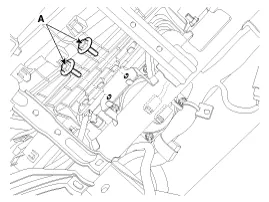
Remove the passenger airbag mounting bolts (A).
|
| 4. |
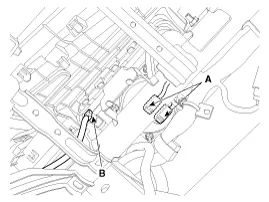
Disconnect the passenger airbag connector (A) and active vent connector (B).
|
| 5. |
Remove the crash pad.
(Refer to Body - "Main crash pad assembly")
|

| 6. |
Remove the mounting bolts from the crash pad. Then remove the passenger airbag.
|

| Installation |
| 1. |
Remove the ignition key from the vehicle. |
| 2. |
Disconnect the battery negative cable from battery and wait for at least thirty seconds before beginning work. |
| 3. |
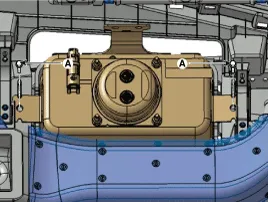
Place a passenger airbag on the crash pad and tighten the passenger airbag mounting bolts (A).
|
| 4. |
Install the crash pad.
(Refer to Body - "Main crash pad assembly") |
| 5. |
Tighten the passenger airbag mounting bolts.
|
| 6. |
Connect the passenger airbag harness connector to the SRS main harness connector. |
| 7. |
Reinstall the glove box housing.
(Refer to Body - "Glove box housing") |
| 8. |
Reconnect the battery negative cable. |
| 9. |
After installing the passenger airbag (PAB), confirm proper system operation:
|
Description The Side Airbags (SAB) are installed inside the front seat and protects the driver and passenger from danger when side crash occurs.
Other information:
Kia Cadenza YG 2016-2021 Service Manual: Description and Operation
Description The immobilizer system will disable the vehicle unless the proper ignition key is used, in addition to the currently available anti-theft systems such as car alarms, the immobilizer system aims to drastically reduce the rate of auto theft.
Kia Cadenza YG 2016-2021 Service Manual: Receiver-Drier Repair procedures
Replacement 1. Remove the condenser, and then remove the bottom cap (B) with L wrench (A) from the condenser. Tightening torque : 9.8~14.7N.m (1.0~1.5kgf.m, 7.2~10.8 lb-ft) 2. Remove the desiccant (A) from condenser using a long nose plier.
Categories
- Manuals Home
- Kia Cadenza Owners Manual
- Kia Cadenza Service Manual
- Steering System
- Components and Components Location
- Engine Control / Fuel System
- New on site
- Most important about car

Copyright © 2026 www.kcadenzavg.com - 0.0281