
Kia Cadenza YG: Tires/Wheels / Wheel Repair procedures
| Hub nut tightening sequence |
Tightening torque:
88.3 ~ 107.9N.m (9.0 ~ 11.0kgf.m, 65.1 ~ 79.6lb-ft) |

When using an impact gun, final tightening torque should be checked using a torque wrench. |

| 1. |
Jack up the vehicle. |
| 2. |
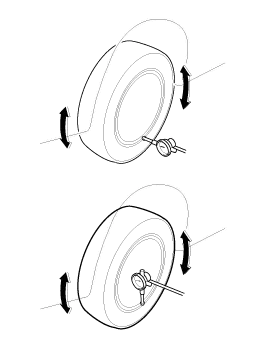
Measure the wheel Run-out by using a dial indicator as illustration below.
| ||||||||||||
| 3. |
If measured value exceeds the standard value, replace the wheel.
|
Tire wear 1. Measure the tread depth of the tires. Tread depth [limit] : 1.6 mm (0.063 in.) 2. If the remaining tread depth (A) is less than the limit, replace the tire.
Front wheel alignment When using a commercially available computerized wheel alignment equipment to inspect the front wheel alignment, always position the vehicle on a level surface with the front wheels facing straight ahead.
Other information:
Kia Cadenza YG 2016-2021 Service Manual: Schematic Diagrams
Circuit Diagram SVM System Input/Output 1. Camera input ItemSpecificationLens angle of view190 degreesAngle of viewHorizontal186 degreesVertical135 degreesFunctionProvides the original image of the wide angle image (no additional function)Application locationSame camera applied to the front, rear, left and right 2.
Kia Cadenza YG 2016-2021 Service Manual: Description and Operation
System Overview RPAS (Rear Parking Assist System) is an electronic driving aid that warns the driver to be cautious while parking or in low speed environments. The sensor uses ultrasonic waves to detect objects within proximity of the vehicle.
Categories
- Manuals Home
- Kia Cadenza Owners Manual
- Kia Cadenza Service Manual
- Schematic Diagrams
- Timing Chain Repair procedures
- Components and Components Location
- New on site
- Most important about car
