
Kia Cadenza YG: Blower / Intake Actuator Repair procedures
| Inspection |
| 1. |
Ignition "OFF". |
| 2. |
Disconnect the intake actuator connector. |
| 3. |
Verify that the actuator operates to the recirculation position when connecting 12V to the terminal 3 and grounding terminal 7. |
| 4. |
Verify that the intake actuator operates to the fresh position when connecting in the reverse.
|

| 5. |
Check the voltage between terminals 5 and 6.
Specification
|
| 6. |
If the intake actuator is not operated well, substitute with a known-good intake actuator and check for proper operation. |
| 7. |
If the problem is corrected, replace the intake actuator. |
| Replacement |
| 1. |
Disconnect the negative (-) battery terminal. |
| 2. |
Remove the crash pad.
(Refer to BD group – "Crash pad") |
| 3. |
Disconnect the Intake actuator connector (A). |
| 4. |
Loosen the mounting screw and then remove the intake actuator (B). |
| 5. |
Installation is the reverse order of removal.
|
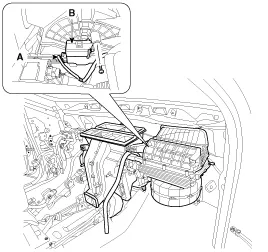
Description 1. The intake actuator is located at the blower unit. 2. It regulates the intake door by signal from control unit. 3. Pressing the intake selection switch will shift between recirculation and fresh air modes.
Other information:
Kia Cadenza YG 2016-2021 Service Manual: Description and Operation
Description System Operation Typically, lane departure warning is activated at a speed over 70 KPH, but suppressed in case of unintentional lane departure when driver do not operate turn signal. System Operation Conditions 1. User Conditions (1) When unintended lane departure is occured, warnings are generated.
Kia Cadenza YG 2016-2021 Service Manual: Temperature Control Actuator Repair procedures
Inspection 1. Ignition "OFF" 2. Disconnect the connector of temperature control actuator. 3. Verify that the temperature control actuator operates to the hot position when connecting 12V to the terminal 3 and grounding terminal 7. Verify that the temperature control actuator operates to the cool position when connecting in the rev
Categories
- Manuals Home
- Kia Cadenza Owners Manual
- Kia Cadenza Service Manual
- Steering System
- Crankshaft Damper Pulley Components and Components Location
- Battery Troubleshooting
- New on site
- Most important about car
