
Kia Cadenza YG: Cooling System / Thermostat Repair procedures
| Removal |
Removal of the thermostat would have an adverse effect,
causing a lowering of cooling efficiency. Do not remove the thermostat,
even if the engine tends to overheat. |

| 1. |
Drain engine coolant so its level is below thermostat.
(Refer to Cooling System - "Coolant") |
| 2. |
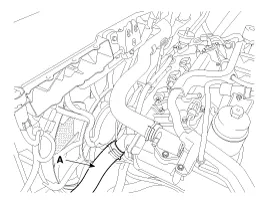
Disconnect the ratiator lower hose (A).
(Refer to Cooling System - "Radiator Hose") |
| 3. |
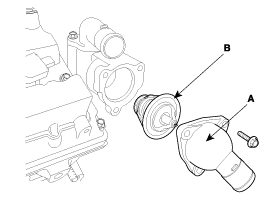
Remove the water inlet fitting (A) and the thermostat (B).
|
| Inspection |
| 1. |
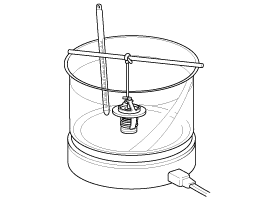
Immerse thermostat in water heated to over 95°C (203°F), then heat for at least 3 minutes to check valve lift.
|
| 2. |
Check the valve opening temperature.
If the valve opening temperature is not as specified, replace the thermostat. |
| 3. |
Check the valve lift.
If the valve lift is not as specified, replace the thermostat. |
| Installation |
| 1. |
Place the thermostat in thermostat housing.
|
| 2. |
Install the water inlet fitting (A).
|
| 3. |
Connect the ratiator lower hose (A).
|
| 4. |
Install the ratiator upper hose.
(Refer to Cooling System - "Radiator Hose") |
| 5. |
Fill with engine coolant. |
| 6. |
Start engine and check for leaks. |
Components 1. Water temperature control assembly2. Thermostat3. Water inlet fitting pipe
Troubleshooting SymptomsPossible CausesRemedyCoolant leakage • From the thermostat gasket Check the mounting bolts • Check the torque of the mounting bolts • Retighten the bolts and check leakage again.
Other information:
Kia Cadenza YG 2016-2021 Service Manual: A/C Pressure Transducer Description and Operation
Description A/C pressure transducer convert the pressure value of high pressure line into voltage value after measure it. By converted voltage value, engine ECU controls cooling fan by operating it high speed or low speed. Engine ECU stop the operation of compressor when the temperature of refrigerant line is so high or so low irregularl
Kia Cadenza YG 2016-2021 Service Manual: Intake Actuator Repair procedures
Inspection 1. Ignition "OFF". 2. Disconnect the intake actuator connector. 3. Verify that the actuator operates to the recirculation position when connecting 12V to the terminal 3 and grounding terminal 7. 4. Verify that the intake actuator operates to the fresh position when connecting in the reverse.
Categories
- Manuals Home
- Kia Cadenza Owners Manual
- Kia Cadenza Service Manual
- Steering System
- Specifications
- Restraint
- New on site
- Most important about car
