
Kia Cadenza YG: Cooling System / Water pump Repair procedures
Kia Cadenza YG 2016-2021 Service Manual / Engine Mechanical System / Cooling System / Water pump Repair procedures
| Removal |
| 1. |
Remove the engine room under cover.
(Refer to Engine And Transaxle Assembly - "Engine Room Under Cover") |
| 2. |
Drain the coolant.
(Refer to Cooling System - "Coolant") |
| 3. |
Remove the drive belt.
(Refer to Timing System - "Drive Belt") |
| 4. |
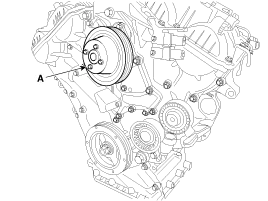
Remove the water pump pulley (A).
|
| 5. |
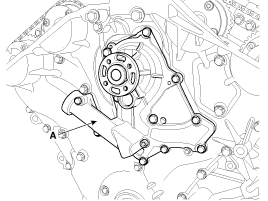
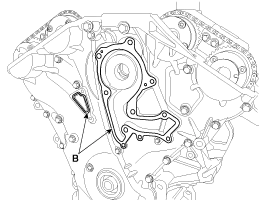
Remove the water pump (A) and gaskets (B).
|
| Inspection |
| 1. |
Check each part for cracks, damage or wear, and replace the coolant pump assembly if necessary. |
| 2. |
Check the bearing for damage, abnormal noise and sluggish rotation, and replace the coolant pump assembly if necessary. |
| 3. |
Check for coolant leakage. If coolant leaks from hole, the seal is defective. Replace the coolant pump assembly.
|

| Installation |
Water Pump
| 1. |
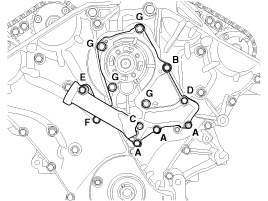
Install the water pump (A) with the new gaskets (B).
|
| 2. |
Install the water pump pulley (A).
|
| 3. |
Install in the reverse order of removal. |
| 4. |
Fill the radiator with coolant and check for leaks.
(Refer to Cooling System - "Coolant") |
Components 1. Water pump pulley2. Water pump 3. Water pump gasket
Troubleshooting SymptomsPossible CausesRemedyCoolant leakage • From the bleed hole of the water pump Visually check • Check leaks after about ten-minute warming up.
Other information:
Kia Cadenza YG 2016-2021 Service Manual: Pantoscopic Camera Components and Components Location
C
Kia Cadenza YG 2016-2021 Service Manual: Compressor Oil Repair procedures
Oil Specification 1. The HFC-134a system requires synthetic (PAG) compressor oil whereas the R-12 system requires mineral compressor oil. The two oils must never be mixed. 2. Compressor (PAG) oil varies according to compressor model. Be sure to use oil specified for the model of compressor.
Categories
- Manuals Home
- Kia Cadenza Owners Manual
- Kia Cadenza Service Manual
- Components and Components Location
- Restraint
- Brake System
- New on site
- Most important about car

Copyright © 2026 www.kcadenzavg.com - 0.0284