
Kia Cadenza YG: Rear Suspension System / Rear Stabilizer Bar Repair procedures
Kia Cadenza YG 2016-2021 Service Manual / Suspension System / Rear Suspension System / Rear Stabilizer Bar Repair procedures
| Replacement |
| 1. |
Remove the rear wheel & tire.
|

| 2. |
Loosen the nut and then remove the rear stabilizer link (B) with the rear lower arm (A).
|

| 3. |
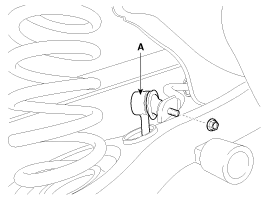
Loosen the nut and then remove the stabilizer link (A) with the rear stabilizer bar.
|
| 4. |
Loosen the mounting bolt and then remove the stabilizer bar (B) with the sub frame (A).
|

| 5. |
Installation is the reverse of removal. |
| Inspection |
| 1. |
Check the rear stabilizer bar for deformation. |
| 2. |
Check the rear stabilizer link ball joint for damage. |
Removal 1. Remove the rear wheel & tire. Tightening torque: 88.3 ~ 107.9N.m (9.0 ~ 11.0kgf.m, 65.1 ~ 79.6lb-ft) Be careful not to damage to the hub bolts when removing the rear wheel & tire.
Replacement 1. Remove the rear wheel & tire. Tightening torque: 88.3 ~ 107.9N.m (9.0 ~ 11.0kgf.m, 65.1 ~ 79.6lb-ft) Be careful not to damage to the hub bolts when removing the rear wheel & tire.
Other information:
Kia Cadenza YG 2016-2021 Service Manual: Pantoscopic Camera Components and Components Location
C
Kia Cadenza YG 2016-2021 Service Manual: Blower Unit Repair procedures
Replacement 1. Disconnect the negative (-) battery terminal. 2. Remove the heater and blower unit.(Refer to HA group – heater unit). 3. Remove the blower unit (A) from the heater unit after loosening a mounting bolt and 3 screws. Make sure that there is no air leaking out of the blower and duct joints.
Categories
- Manuals Home
- Kia Cadenza Owners Manual
- Kia Cadenza Service Manual
- Rail Pressure Sensor (RPS) Schematic Diagrams
- Driveshaft and axle
- Transaxle Control Module (TCM) Repair procedures
- New on site
- Most important about car

Copyright © 2026 www.kcadenzavg.com - 0.0237