Kia Cadenza YG: General Information / Towing
If the vehicle needs to be towed, call a professional towing service. Never tow vehicle with just a rope or chain. It is very dangerous.
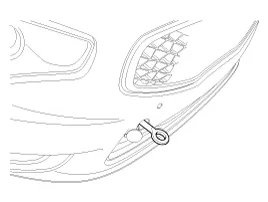
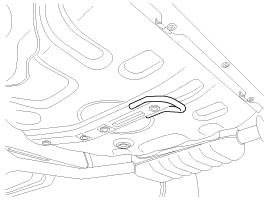
Emergency Towing
There are three popular methods of towing a vehicle :
| – |
The operator loads the vehicle on the back of truck. This is best way of transporting the vehicle.
|
| – |
The tow truck uses two pivoting arms that go under the tires of the driving axle and lift them off the ground. The other two wheels remain on the ground.
|
| – |
The tow truck uses metal cables with hooks on the ends. These hooks go around parts of the frame or suspension, and the cables lift that end of the vehicle off the ground. The vehicle''s suspension and body can be seriously damaged if this method of towing is attempted.
|
If the vehicle cannot be transported by flat-bed, should be towed with the wheels of the driving axle off the ground and do the following :
Manual Transaxle
| • |
Release the parking brake.
|
| • |
Shift the Transaxle to neutral
|
Automatic Transaxle
| • |
Release the parking brake.
|
| • |
Shift to [D] position, then [N] position.
|
| • |
The vehicle equipped with full-time 4WD should be only transported on a flat-bed.
|
| • |
Improper towing preparation will damage the transaxle. follow the above procedure exactly. If you cannot shift the transaxle or start the engine(automatic transaxle), your vehicle must be transported on a flatbed.
|
| • |
It is the best to tow vehicle no farther than 30km (19miles), and keep the speed below 50km/h (30mph). (For the full-time 4WD vehicle, limit the towing to 1.5km (1mile) and 15km/h (10mph)
|
| • |
Trying to lift or tow your vehicle by the bumpers will cause serious damage. The bumpers are not designed to support the vehicle''s weight.
|
|
Lift And Support Points
When heavy rear components such as suspension, fuel tank, spare tire, tailgate and trunk lid are to be removed, place additional weight in the luggage area before hoisting.
Basic Service Symbols
There are five primary symbols used to complement illustrations. These symbols indicate the part to apply such materials during service.
Other information:
C
Teaching Procedures
1.
Key Teaching Procedure
Key teaching must be done after replacing a defective PCM(ECM) or when providing additional keys to the vehicle owner.
The procedure starts with an PCM(ECM) request for vehicle
specific data (PIN code: 6digits) from the tester.